History · A Legacy of Civil Rights
They stood in line until the line moved.
From a Montgomery bus to a Lowndes County ballot, the Black Belt was where the right to vote was fought for, county by county, between 1955 and 1970.
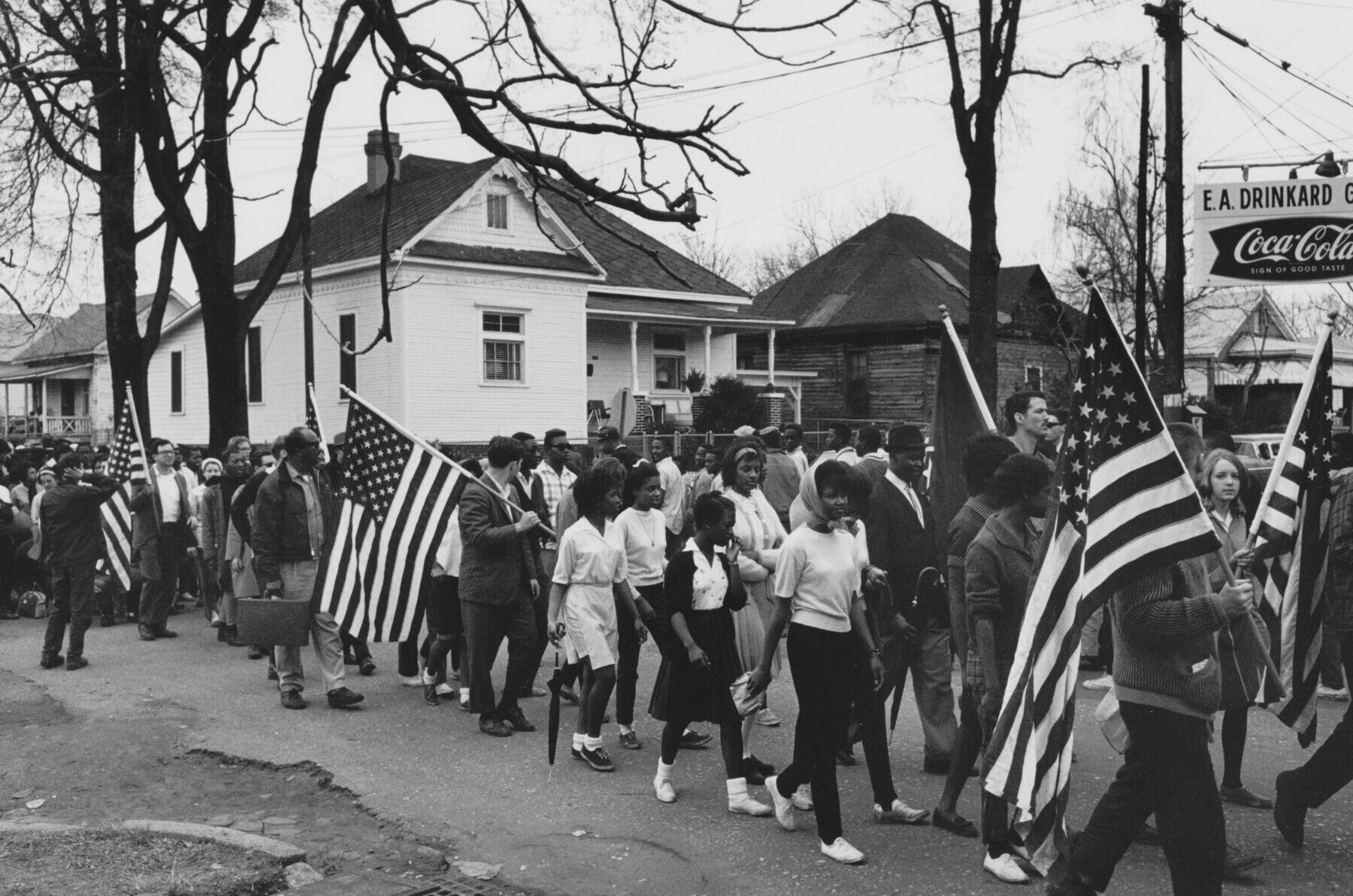
Selma to Montgomery march, 1965. Peter Pettus, Library of Congress
Why here
The counties that grew the South’s cotton were the counties where Black residents were the majority, and where they were kept furthest from the ballot. So that’s where the movement had to win. It did it with mass meetings in country churches, with boycotts and lawsuits, with people who lost their homes for registering and came back the next week to help somebody else register.
The places
Nine towns. One movement.
Pick a place on the map to read what happened there. The gold line is U.S. Route 80, the road the marchers took from Selma to Montgomery.
Locations are approximate.
The legacy
The work didn’t end in 1970.
Go see it
Walk where it happened.
Keep Reading
The long version, in our own words.
Our essays on Marion and Lowndes County go deeper into the people behind these dates.